Trump questions whether Harris is ‘Indian or Black’ in heated interview
White House slams former president’s attack on Democratic 2024 rival’s identity as ‘repulsive’ and ‘insulting’.
Read MoreWhere Skepticism Meets Insight
White House slams former president’s attack on Democratic 2024 rival’s identity as ‘repulsive’ and ‘insulting’.
Read More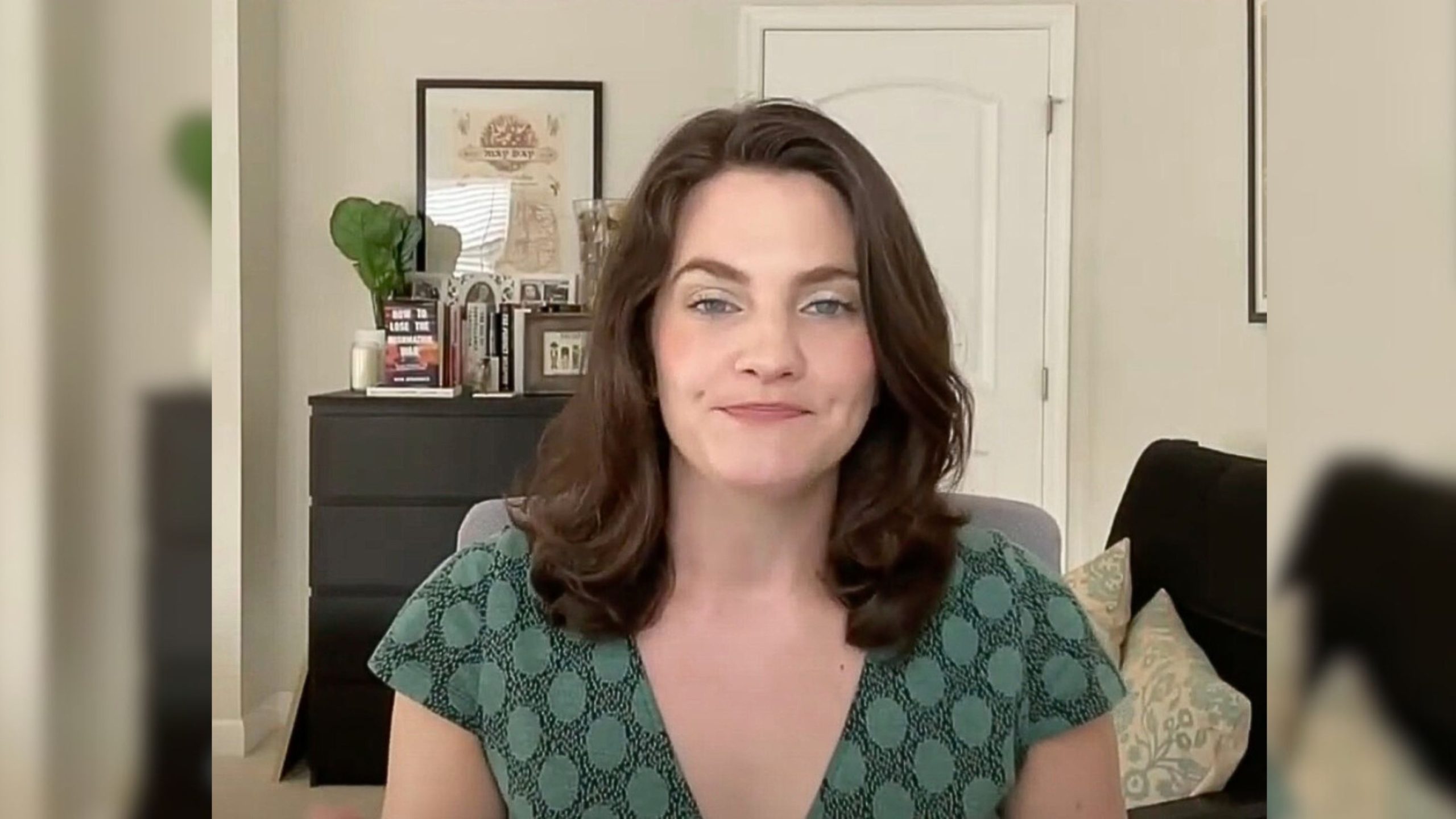
If you’re tired of censorship and dystopian threats against civil liberties, subscribe to Reclaim The Net.
America’s attempt to set up what critics called the “Ministry of Truth” failed miserably last year when the Disinformation Governance Board was quickly set up as an advisory to the Department of Homeland Security (DHS) – and then quickly dissolved, under massive public pushback.
The Board’s head was Nina Jankowicz, whose role some of those same critics, among politicians and media among them, summed up as “misinformation czar.”
Let’s say that this is a kind way of saying, “censorship czar.” But, reporting to this effect still personally offended Jankowicz enough to file a defamation lawsuit against Fox News.
And now, a federal judge has dismissed that suit.
We obtained a copy of the order for you here.
Jankowicz stated in the filing that Fox was making false claims about her intent to censor Americans, denying also that she “wanted to give verified Twitter users, including herself, the power to edit others tweets,” or that she was actually fired (rather than resigning).
The reason she had to leave the Board, Jankowicz asserted, was the “harassment” she endured because Fox published reports that contained those claims.
US District Court for the District of Delaware Judge Colm Connolly, however, dismissed these three arguments. Jankowicz cited 37 statements heard on Fox, but the judge said 36 of them were about the Board in general, not her in particular.
And the one instance that could be construed to refer to Jankowicz (her picture was used to illustrate a report about the Board) doesn’t count, either.
The Fox report said the Board was “dedicated to working with the special media giants for the purpose of policing information.”
The judge decided to express himself plainly: “The statement is not defamatory because it is not false.”
And he didn’t stop there: “The Board was formed precisely to police information and to work with non governmental actors,” Connolly wrote.
The fact that the Board was to “coordinate” with private companies to tackle what they identified as “misinformation”, is an objective that Connolly said is “fairly characterized as a form of censorship.”
As for the claim that Fox lied regarding the Twitter controversy, the ruling reads: “The complaint itself quotes Jankowicz confirming in a Zoom session that she endorsed the notion of having ‘verified’ individuals edit the content of others’ tweets.”
Fox commented on this outcome by saying they were satisfied that the court supported the First Amendment, while Jankowicz told her GoFundMe supporters, who are raising funds for her legal fees, that she would appeal.
The case is just one episode in the legal battles raging in the US, that fall into the broader category of “supercontroversy” that is the the Big Government-Big Tech collusion.
If you’re tired of censorship and dystopian threats against civil liberties, subscribe to Reclaim The Net.
The post Disinformation Board Chief Sued Fox News For Alleging She Was Pro-Censorship. A Judge Agreed With Fox News. appeared first on Reclaim The Net.
Read More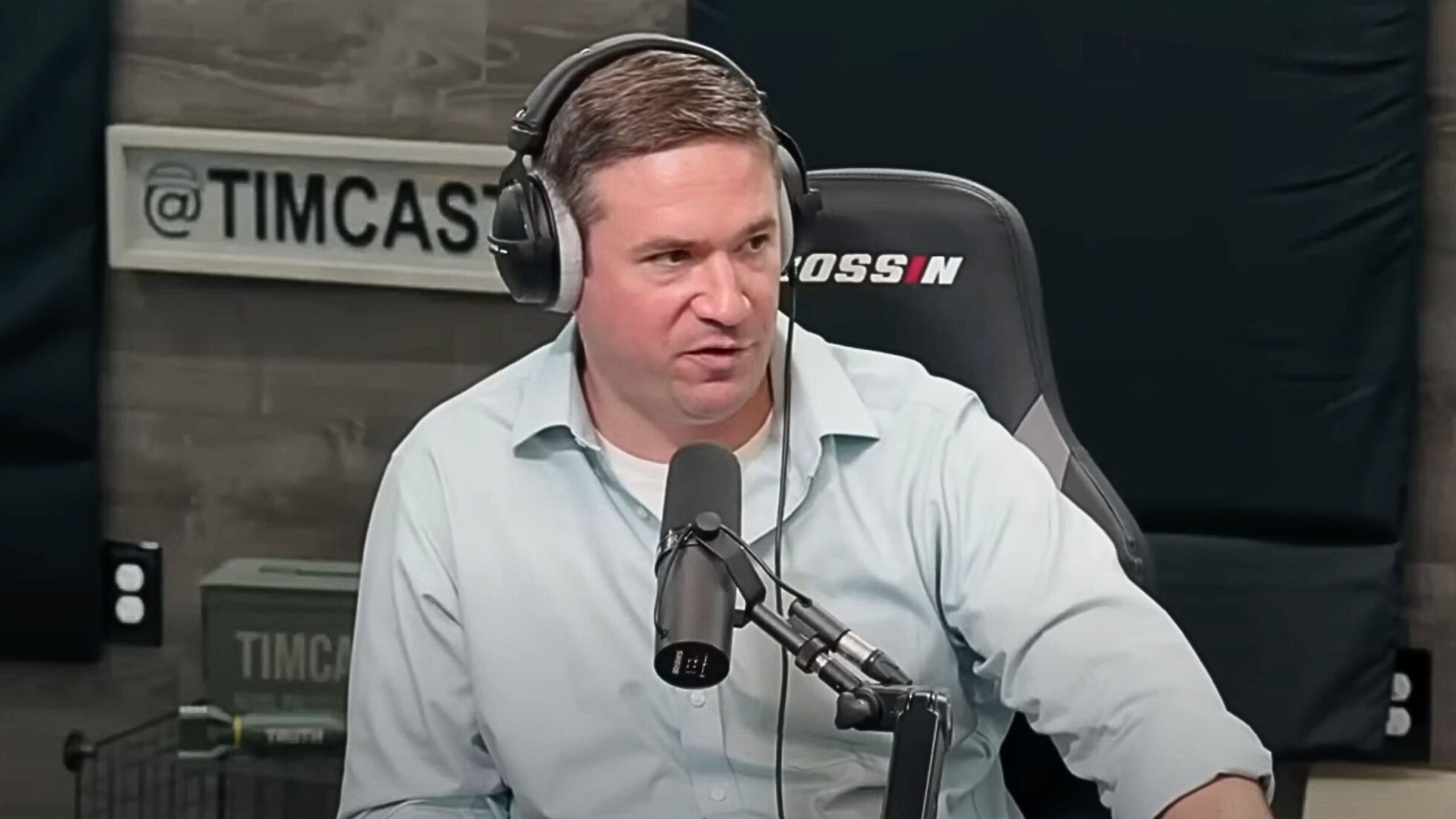
If you’re tired of censorship and dystopian threats against civil liberties, subscribe to Reclaim The Net.
Missouri Attorney General Andrew Bailey wants First Amendment free speech protections to be bolstered and believes that the separation of Tech and State ( creating a “wall of separation” between them) is in order.
This is to make sure government censorship is efficiently prevented going forward, he suggested.
Bailey sat down with journalist Tim Pool, and went through a litany of other issues plaguing political and social democratic processes, most clearly visible in what critics of the current White House consider to be the government colluding with social media companies to suppress lawful speech.
Bailey spoke about the Missouri v. Biden case (which reached the Supreme Court as Murthy v. Missouri) to say that “government coerced censorship” has already been proven, and now that the case has been referred back to a lower court, the discovery process can be used to fully expose what the state AG called, “that vast Censorship Enterprise.”
Regarding the much contested on both sides of the aisle (but for different reasons) Section 230 of the CDA, Bailey agreed with the host that it should not continue in the current form, since platforms are protected for hosting third-party content – and then allowed to freely censor that content.
But the collusion with the government demonstrated in stark terms why Section 230 should be reformed so that it’s “just a shield” for platforms, without also putting the “sword” of censorship in their hands, the interlocutors agreed.
The issue of social media and internet services becoming so widespread they are arguably the most powerful influence on people’s choices – from shopping to politics – means they qualify as the public square.
And on that square, culture can be “fundamentally reshaped,” Bailey said. Platforms banning “misgendering speech” was mentioned as an example.
And back to Section 230, but this time with regards to Wikipedia. Here, the Missouri AG doesn’t believe immunity from the rules should extended to Wikipedia.
This is because whatever is published on Wikipedia is not clearly marked as written by users (such as on social platforms) – this is only visible in the source of a webpage.
“The byline is, ‘from Wikipedia’,” Pool remarked.
“They look like a publisher,” Bailey said, alleging that Section 230 was not designed to protect those.
If you’re tired of censorship and dystopian threats against civil liberties, subscribe to Reclaim The Net.
The post Missouri AG Andrew Bailey Advocates for Tech-State Separation Criticizes, Big Tech Censorship Influence appeared first on Reclaim The Net.
Read MoreHezbollah on Wednesday confirmed that one of its most senior military commanders, Fuah Shukr, was killed by an Israeli airstrike that hit a residential building in the southern suburbs of Beirut on Tuesday.
Lebanese sources told Reuters that Shukr’s body was found in the rubble on Wednesday evening, and at least two women and two children were also killed in the strike.
Shukr, also known as Hajj Mohsen, was a founding member of Hezbollah. According to Lebanon’s Al Mayadeen, he was one of Hezbollah Secretary-General Hassan Nasrallah’s closest advisors.
Hezbollah said that Nasrallah would respond to the Israeli attack in a speech at Shukr’s funeral on Thursday. “As for our political stance on this sinful aggression and great crime, it will be expressed by Hezbollah Secretary-General Sayyed Hassan Nasrallah tomorrow in the martyred leader’s funeral procession,” the Lebanese group said.
Israel said it targeted Shukr in response to the rocket that killed 12 Druze children in the Israeli-occupied Golan Heights. Hezbollah denied responsibility for the strike and blamed it on an Israeli air defense rocket.
Druze residents of the Golan Heights, who mostly consider themselves Syrian, rejected the idea of retaliation for the killing of the 12 children. “Based on our Arab, Islamic, monotheistic beliefs, we reject that a single drop of blood be shed in the name of revenge for our children,” said the Religious and Temporal Commission in the occupied Syrian Golan Heights, according to Middle East Eye.
Read MoreArgentina’s Jose Gil won men’s gold ahead over home favourite Anthony Jeanjean and China’s Deng Yawen won women’s event.
Read MoreFar-right, anti-Muslim protesters clashed with police after targeting a mosque.
Read MoreThe head of the Sudanese Armed Forces, General Abdel Fattah al-Burhan survived a drone strike on the Gebeit army base.
Read More
If you’re tired of censorship and dystopian threats against civil liberties, subscribe to Reclaim The Net.
Two bills combined – the Kids Online Safety Act (KOSA) and the Children and Teens’ Online Privacy Protection Act (COPPA 2.0) – have passed in the US Senate in a 91-3 vote, and will now be considered by the House.
Criticism of the bills focuses mainly on the likelihood that, if and when they become law, they will help expand online digital ID verification, as well as around issues like censorship (removal and blocking of content).
Related: The 2024 Digital ID and Online Age Verification Agenda
The effort to make KOSA and COPA 2.0 happen was spearheaded by a parent group that was pushing lawmakers and tech companies’ executives to move in this direction, and their main demand was to enact new rules that would prevent cyberbullying and other harms.
And now the main sponsors, senators Richard Blumenthal, a Democrat, and Republican Marsha Blackburn are trying to dispel these concerns, suggesting these are not “speech bills” and do not (directly) impose age verification.
Further defending the bills, they say that the legislation does not mandate that internet platforms start collecting even more user data, and reject the notion it is invasive of people’s privacy.
But the problem is that although technically true, this interpretation of the bills’ impact is ultimately incorrect, as some of their provisions do encourage censorship, facilitate the introduction of digital ID for age verification, and leave the door open for mass collection of online users’ data – under specific circumstances – and end ending anonymity online.
The bills are hailed by supporters as “landmark” legislation that is the first to focus on protecting children on the internet in the last 20 years, with some lawmakers in the Senate, like majority leader, Democrat Chuck Schumer, describing the result of the vote as “a momentous day.”
But digital rights group Electronic Frontier Foundation (EFF) is describing KOSA in particular as “a terrible idea” and is, instead of positive sloganeering about protecting the children, delving deeper into what the bills in fact seek to mandate or pave the way for.
The EFF is convinced that they should never become law and is urging citizens to take action to stop Congress from adopting KOSA. The overall criticism is that long-existing problems plaguing youths – such as mental disorders, drug, alcohol, and tobacco abuse, etc., should not be linked to the internet as if these issues weren’t present before.
EFF believes that the bill is in fact designed to “punish bad internet speech,” and makes a point prior to the House vote – appearing to warn about possible politicization – that once it becomes law, it will be out of the hands of the members of Congress to implement it.
Instead, the task would be entrusted to the Federal Trade Commission (FTC), which EFF makes sure to note is “majority-controlled by the president’s party.”
The group said that lawmakers supporting KOSA have chosen to ignore that “the vast majority of speech that KOSA affects is constitutionally protected in the US, which is why there is a long list of reasons that KOSA is unconstitutional.”
KOSA – although stating that platforms are not required to implement age verification – is seen by opponents as paving the way for expansion of this controversial policy, as it wants FTC, FCC, and the Secretary of Commerce to study “options for developing systems to verify age at the device or operating system level.”
Censorship-wise, it allows the FTC to investigate and sue sites that are branded as serving content “harmful” to children. And unlike the previous versions which covered only certain platforms, guided by the number of users, revenue, etc., the bill now appears to cover all platforms, which, unless the wording is changed, would be a fairly drastic provision.
When it comes to privacy and data collection, despite claims to the contrary, platforms will be able to collect or buy data on people with the goal of estimating a user’s age.
According to Senator Blumenthal, this happens “if an online platform already knows that a user is underage.”
How a platform might know that aside, the senator adds, “then it has to provide the safety and privacy protections required by the legislation -the platform cannot bury its head in the sand when it knows a user is underage.”
“Online platforms often already request a date of birth from new users, either for advertising and profiling the user or for compliance with the Children’s Online Privacy Protection Act (COPPA). Online platforms also frequently collect or purchase substantial amounts of other data to understand more about their users,” Blumenthal has said.
AS for COPPA 2.0, it also indirectly pushes for more age verification thanks to the new restrictions on the collection of data from minors. And while the bill doesn’t mandate age verification – platforms that want to collect data or target ads will have to verify the users’ age.
One way to abuse this provision for censorship is the same as what has been happening with the first iteration of COPPA – put creators in a position (say, through specific platform rules) to mark content as safe for children, which means it becomes restricted, and demonetized (stripped of ads).
If you’re tired of censorship and dystopian threats against civil liberties, subscribe to Reclaim The Net.
The post Senate Passes Kids’ “Safety” Bills Despite Privacy, Digital ID, and Censorship Concerns appeared first on Reclaim The Net.
Read More
Haniyeh killing piles pressure on embarrassed Republican Guard to defend Iran
Wed, 07/31/2024 – 19:06
At around 2 am an explosion shook northern Tehran.
It soon became clear that Ismail Haniyeh, the political leader of Hamas, had been assassinated.
Just nine hours previously, Haniyeh had been a key dignitary in the ceremony inaugurating Masoud Pezeshkian as Iran’s new president.
With its Palestinian guest now dead, a shocked Iran declared three days of mourning.
The assassination has piled pressure on Iran’s security establishment, which once again saw Israeli agents infiltrate the country and stage an attack.
Just a few days ago, the outgoing intelligence minister, Esmeil Khatib, boasted that “the dismantling of Mossad’s network” in Iran was his proudest achievement in office.
This discrepancy has not been lost on Iranian MPs and other political figures.
“The presence of infiltrators in the assassination of Ismail Haniyeh cannot be denied,” said Hossein-Ali Haji Deligani, a member of Iran’s parliament. “We will give Israel a harsher response than promised.”
Ali Motahari, a prominent former MP, asked a question on many Iranians’ lips: “How did the Zionists know the whereabouts of Haniyeh as our guest in Tehran?”
Haniyeh’s killing has also raised people’s suspicions that Ebrahim Raisi, Iran’s president who was killed in a helicopter accident in May, actually died at Israel’s hand.
Mohammad Mehdi Esmaili, the culture minister under Raisi, appeared to suggest as much in a post on X.
“Does this tweet confirm the speculations about the assassination of our dear Raisi?” asked ultraconservative activist Davoud Modarresian in response.
A senior conservative source told MEE that Raisi’s whole family believes he was killed by Israel.
Popular anger has been turned towards the Islamic Revolutionary Guard Corps (IRGC), whose security apparatus was responsible for securing Pezeshkian’s inauguration and senior guests like Haniyeh.
A source close to officials in the Iranian presidency told MEE that Haniyeh was staying near Tehran’s Saadabad palace, which is used by the president’s office, when he was killed.
The area was heavily guarded by the IRGC, the source added.
Iranian President Masoud Pezeshkian meets with Ismail Haniyeh in Tehran, on 30 July (Iran’s Presidency/Wana/Reuters)
In recent years the IRGC has grown into a powerful political and economic entity, as well as Iran’s premier military force, and Iranians are now accusing it of neglecting its primary duties.
“While offering condolences, I must say it’s time to step back from building malls,” Milad Dokhanchi, a writer and former state TV host, posted on X.
A former senior official told MEE that he had “no doubt” that Israel has “seriously infiltrated” the ruling establishment.
“This is because the IRGC is focused on arresting critics instead of focusing on the enemy.”
Haniyeh’s assassination poses a huge challenge to the incoming administration of Pezeshkian, a reformist who shocked the conservative establishment by winning the presidency by promising Iranians a softer, more open approach to foreign and domestic affairs.
Now, not only is Iran poised to seek retribution against Israel, its ally Hezbollah may also escalate the conflict on the Lebanese-Israeli border after the assassination of senior commander Fuad Shukr hours before the strike on Haniyeh. Hamas, already fighting Israel in Gaza, has also vowed a harsh response.
“Unfortunately, our deterrence has once again faced a setback with the new attack by Israel,” said the former senior official, who is part of Iran’s ruling establishment.
He compared the situation to the Israeli attack on the Iranian consulate in Damascus in April, which killed senior IRGC commanders and provoked a massive drone and missile attack on Israel in response.
“So we have no choice but to respond strongly to restore our deterrence.”
Conservatives in Iran will also take an even harder line on any attempts Pezeshkian makes to engage with the West.
A moderate-conservative foreign policy analyst who regularly writes for Iranian media noted that Israel has long opposed dialogue between the West and Iran, “and will use any action to create obstacle”.
“This criminal act is in line with that goal. Hamas’s reaction to this assassination creates a more tense scene,” he told MEE.
The analyst believes Netanyahu wants to create a situation that will ensure Donald Trump wins back the US presidency in November, “or at least prevent Kamala Harris from getting tough with Zionists”.
Another political analyst, Ahmad Zeidabadi, believes Israel was trying to goad Iran with its choice of timing.
“Israel likely could have assassinated Haniyeh in Qatar or Turkey, but deliberately chose Tehran as an entirely provocative act,” he said on his Telegram channel.
“Israel likely could have assassinated Haniyeh at other times, too, but deliberately chose the night after Dr Pezeshkian’s inauguration to plunge the new government into crisis, confusion, and disorder from the very beginning.”
A reformist analyst close to the new government told MEE that there were parallels with the assassination of Mohsen Fakhrizadeh, the father of Iran’s nuclear programme, in November 2020.
Fakhrizadeh was killed outside Tehran soon after then-President Hassan Rouhani had received a message from the incoming Biden administration that Washington would soon be ready to rejoin the nuclear deal.
“But soon Israel assassinated Mohsen Fakhrizadeh to provoke the hardliners in Tehran to get more radical against any engagement with the US,” the analyst said.
“The western reaction to this event can either complicate or pave the way for Pezeshkian.”
Haniyeh killing piles pressure on embarrassed Republican Guard to defend Iran
Wed, 07/31/2024 – 19:06
At around 2 am an explosion shook northern Tehran.
It soon became clear that Ismail Haniyeh, the political leader of Hamas, had been assassinated.
Just nine hours previously, Haniyeh had been a key dignitary in the ceremony inaugurating Masoud Pezeshkian as Iran’s new president.
With its Palestinian guest now dead, a shocked Iran declared three days of mourning.
The assassination has piled pressure on Iran’s security establishment, which once again saw Israeli agents infiltrate the country and stage an attack.
Just a few days ago, the outgoing intelligence minister, Esmeil Khatib, boasted that “the dismantling of Mossad’s network” in Iran was his proudest achievement in office.
This discrepancy has not been lost on Iranian MPs and other political figures.
“The presence of infiltrators in the assassination of Ismail Haniyeh cannot be denied,” said Hossein-Ali Haji Deligani, a member of Iran’s parliament. “We will give Israel a harsher response than promised.”
Ali Motahari, a prominent former MP, asked a question on many Iranians’ lips: “How did the Zionists know the whereabouts of Haniyeh as our guest in Tehran?”
Haniyeh’s killing has also raised people’s suspicions that Ebrahim Raisi, Iran’s president who was killed in a helicopter accident in May, actually died at Israel’s hand.
Mohammad Mehdi Esmaili, the culture minister under Raisi, appeared to suggest as much in a post on X.
“Does this tweet confirm the speculations about the assassination of our dear Raisi?” asked ultraconservative activist Davoud Modarresian in response.
A senior conservative source told MEE that Raisi’s whole family believes he was killed by Israel.
Popular anger has been turned towards the Islamic Revolutionary Guard Corps (IRGC), whose security apparatus was responsible for securing Pezeshkian’s inauguration and senior guests like Haniyeh.
A source close to officials in the Iranian presidency told MEE that Haniyeh was staying near Tehran’s Saadabad palace, which is used by the president’s office, when he was killed.
The area was heavily guarded by the IRGC, the source added.
Iranian President Masoud Pezeshkian meets with Ismail Haniyeh in Tehran, on 30 July (Iran’s Presidency/Wana/Reuters)
In recent years the IRGC has grown into a powerful political and economic entity, as well as Iran’s premier military force, and Iranians are now accusing it of neglecting its primary duties.
“While offering condolences, I must say it’s time to step back from building malls,” Milad Dokhanchi, a writer and former state TV host, posted on X.
A former senior official told MEE that he had “no doubt” that Israel has “seriously infiltrated” the ruling establishment.
“This is because the IRGC is focused on arresting critics instead of focusing on the enemy.”
Haniyeh’s assassination poses a huge challenge to the incoming administration of Pezeshkian, a reformist who shocked the conservative establishment by winning the presidency by promising Iranians a softer, more open approach to foreign and domestic affairs.
Now, not only is Iran poised to seek retribution against Israel, its ally Hezbollah may also escalate the conflict on the Lebanese-Israeli border after the assassination of senior commander Fuad Shukr hours before the strike on Haniyeh. Hamas, already fighting Israel in Gaza, has also vowed a harsh response.
“Unfortunately, our deterrence has once again faced a setback with the new attack by Israel,” said the former senior official, who is part of Iran’s ruling establishment.
He compared the situation to the Israeli attack on the Iranian consulate in Damascus in April, which killed senior IRGC commanders and provoked a massive drone and missile attack on Israel in response.
“So we have no choice but to respond strongly to restore our deterrence.”
Conservatives in Iran will also take an even harder line on any attempts Pezeshkian makes to engage with the West.
A moderate-conservative foreign policy analyst who regularly writes for Iranian media noted that Israel has long opposed dialogue between the West and Iran, “and will use any action to create obstacle”.
“This criminal act is in line with that goal. Hamas’s reaction to this assassination creates a more tense scene,” he told MEE.
The analyst believes Netanyahu wants to create a situation that will ensure Donald Trump wins back the US presidency in November, “or at least prevent Kamala Harris from getting tough with Zionists”.
Another political analyst, Ahmad Zeidabadi, believes Israel was trying to goad Iran with its choice of timing.
“Israel likely could have assassinated Haniyeh in Qatar or Turkey, but deliberately chose Tehran as an entirely provocative act,” he said on his Telegram channel.
“Israel likely could have assassinated Haniyeh at other times, too, but deliberately chose the night after Dr Pezeshkian’s inauguration to plunge the new government into crisis, confusion, and disorder from the very beginning.”
A reformist analyst close to the new government told MEE that there were parallels with the assassination of Mohsen Fakhrizadeh, the father of Iran’s nuclear programme, in November 2020.
Fakhrizadeh was killed outside Tehran soon after then-President Hassan Rouhani had received a message from the incoming Biden administration that Washington would soon be ready to rejoin the nuclear deal.
“But soon Israel assassinated Mohsen Fakhrizadeh to provoke the hardliners in Tehran to get more radical against any engagement with the US,” the analyst said.
“The western reaction to this event can either complicate or pave the way for Pezeshkian.”