Far-right protesters clash with police in UK cities as unrest spreads
Prime Minister Keir Starmer has condemned the far right for the unrest and backed police to take strong action.
Read MoreWhere Skepticism Meets Insight
Prime Minister Keir Starmer has condemned the far right for the unrest and backed police to take strong action.
Read MoreAn emotional Khelif comfortably beat Hungary’s Luca Anna to enter the welterweight semis and ensure a podium finish.
Read MoreDonald Trump has proposed that the next US presidential debate take place on Fox News on September 4.
Read More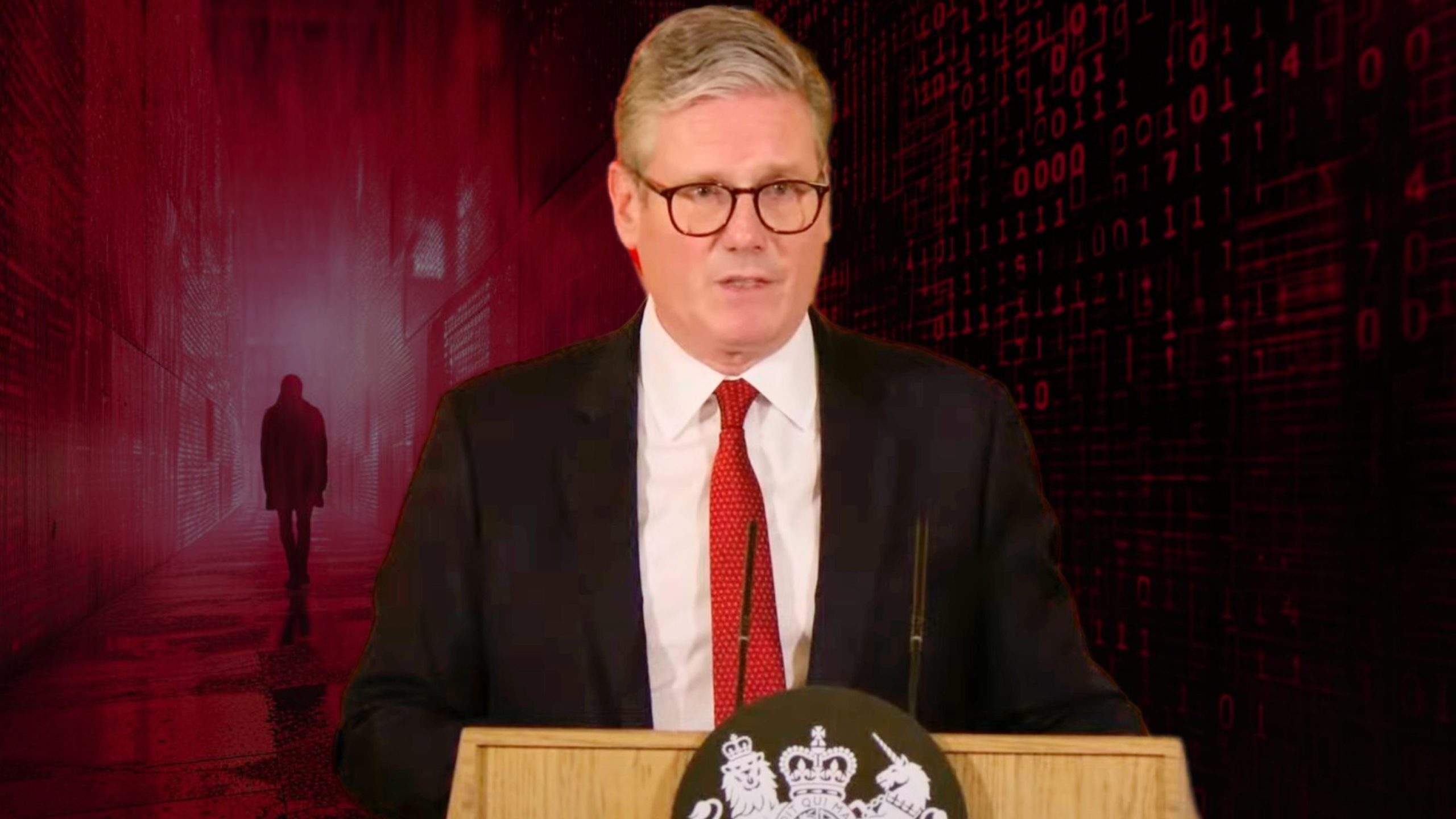
If you’re tired of censorship and dystopian threats against civil liberties, subscribe to Reclaim The Net.
The more things change, the more they remain the same, at least in the UK; after many years of Tory governments’ vigorous efforts to extend mass surveillance indiscriminately targeting citizens and enact stringent anti-free speech laws, the new Labour government seems to be picking up right where the previous one left off.
The wake of the Southport riots has elicited the usual medley of reactions: moves to address societal issues with more surveillance, strengthen the police state, blame “misinformation” and unproven, but always handy to bring up, “foreign meddling.”
But the real malady seems to be squarely at home: in fact, in the prime minister’s office. Keir Starmer happens to be sitting there now, but the policy hardly ever changes: he, too, wants more mass surveillance based on facial recognition, and more pressure on social media to ramp up censorship.
If anything does change it is the intensity of these demands that have long since been rejected as “Orwellian” by rights groups like Big Brother Watch.
Here, Starmer told a news conference called after the events branded as far-right riots, that participants in the protests (whom he called “thugs” and compared with football hooligans) are “mobile” and for that reason, police forces will, going forward, be a part of a network of sorts.
The prime minister added that there will be intelligence and data sharing, as well as “wider deployment of facial recognition technology, and preventative action, criminal behavior orders to restrict their movements before they can even board a train, in just the same way that we do with football hooligans.”
Movement restrictions are said to apply only to those with previous convictions, and those who have committed “violence at protests.” But here things get complicated because even those who were charged with relatively minor offenses like disorderly conduct could end up having their movements surveilled and restricted.
Starmer isn’t in favor of enacting new laws; he seems satisfied that all this can be achieved within the existing legislation and announced a “coordinated response” within the police across the country and law enforcement taking advantage of those laws more than before. But he does want more police officers, and it seems that increasing their numbers will be one election campaign promise that will be kept.
Starmer is announcing these measures as a way to deal not with protests – he insists this is about “violent disorder.” And, he blames online platforms for being the places where that is being “whipped up.”
Meaning, that when the authorities decide some online speech can be considered as incitement to violence, that is, in Starmer’s words, “not a matter of free speech. It is a criminal offense.”
But what will the authorities consider incitement to violence? This is particularly important since a number of lawmakers – such as Labour MP Patrick Hurley, Former MI6 chief Richard Dearlove, and former Security Minister Stephen McPartland – blamed “misinformation” and “disinformation” as well as “speculation” regarding the identity of the Southport stabbing attacker.
Therefore if speculation can be considered misinformation, and misinformation incitement to violence – this opens the door wide to censor views expressed online that basically ask questions about something – i.e., “speculate”.
Regarding online platforms, the prime minister suggested that his approach to the police during a meeting that preceded the news conference (namely, “get the relevant people around the table, and fix the problems and meet the challenges that we have as a country”) will apply to internet platforms as well.
It remains to be seen what “work(ing) together to address the challenges” will look like once Starmer gets online platforms and government representatives at the same table.
Meanwhile, the idea of ushering in even more facial recognition-based mass surveillance is seen as terrible by groups like Big Brother Watch, who have campaigned for years against this type of policing.
The group’s director, Silkie Carlo, said in a statement that the pledge regarding facial recognition as response to public disorder was “alarming.”
According to her, democracy is threatened, not protected with this approach, while the type of mass surveillance pushed by Starmer (and previous governments) “turns members of the public into walking ID cards.”
Carlo made a point of the live facial recognition technology being “dangerously inaccurate,” “common” in Russia and China, supported by no clear legal basis in the UK, and, banned elsewhere in Europe
In her opinion, Starmer did not address the causes of the Southport attack (when three girls were murdered), or the reasons for what Carlo calls “violent, racist thuggery” that followed.
Instead, the prime minister promised more AI surveillance. And that, according to Carlo, is “tone deaf in these circumstances.”
“(It) will give the public absolutely no confidence that this government has the competence or conviction to get tough on the causes of these crimes and protect the public,” she concluded.
If you’re tired of censorship and dystopian threats against civil liberties, subscribe to Reclaim The Net.
The post UK PM Keir Starmer Uses Riots To Call For Mass Surveillance and Social Media Censorship appeared first on Reclaim The Net.
Read MoreBiles pulls off stunning Yurchenko double pike to finish ahead of Brazil’s Rebeca Andrade and compatriot Jade Carey.
Read MoreIsrael must be held accountable for the crimes it is committing against Palestinians in detention camps and prisons.
Read MoreThe 17-year-old breakout gymnast is favourite for gold in Sunday’s final ahead of Nina Derwael and Sunisa Lee.
Read More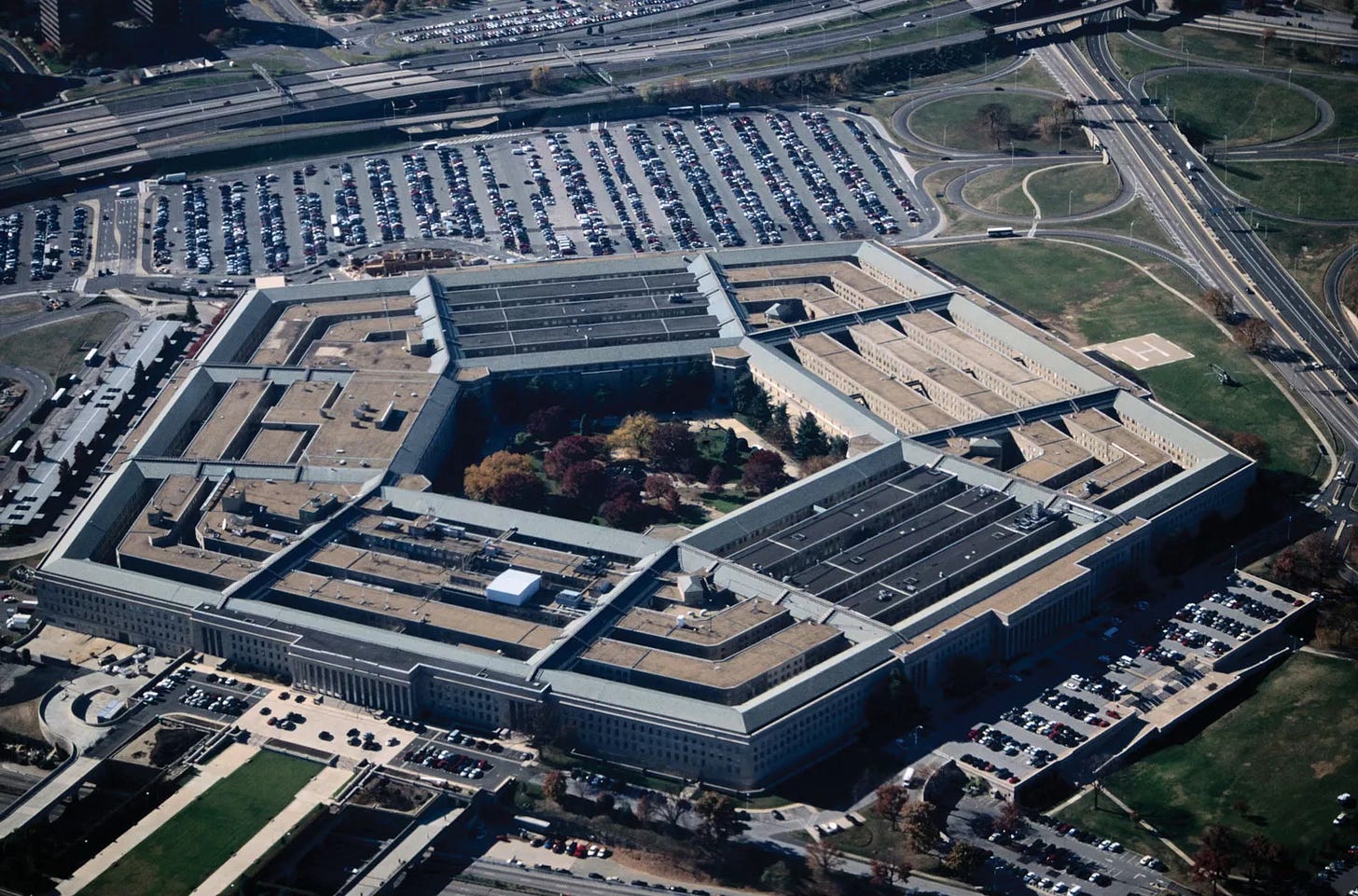
Reprinted from Bracing Views with the author’s permission.
I wrote my first article for TomDispatch in 2007, two years after I’d retired from the military. That article was highly critical of the U.S. military and its disastrous war in Iraq. I wrote that we, the citizens of America, had to save the military from itself and its worst excesses. Sadly, we the people have been demobilized; we have no say about “our” military and its wars.
In fact, while the Iraq and Afghan Wars are now officially over, both lost at enormous cost, we the people are still issuing blank checks to a Pentagon that is wildly if not fatally deluded and delusional.
Back in 2018, Tom Engelhardt, the creator, editor, and prime mover of TomDispatch, asked me to write a new introduction to my article from 2007. Here’s that intro as I wrote it back then:
Retiring from the U.S. military liberated my tongue, but I quickly learned few people were interested in what I had to say. In 2007, I was outraged by the way the Bush administration hid behind the richly bemedaled chest of General David Petraeus, using his testimony before a spineless Congress to evade responsibility for the catastrophic war in Iraq. I wrote an op-ed about how ‘my’ military was deluding itself not only into believing that it was the ‘greatest’ but that it could somehow find a formula to win an unwinnable war. I sent it to the usual suspects, newspapers like the New York Times and Boston Globe, with no response. A friend then mentioned a website I’d never heard of, TomDispatch.com, and I found a man there who would listen: today’s equivalent of I.F. Stone, Tom Engelhardt. What started as a one-off article led to 55 more ‘Tomgrams’ over the last decade.
In that very first post, I asked, ‘How can you win someone else’s civil war?’ It’s a question the U.S. military still avoids asking, let alone answering. Indeed, a state of what I then called ‘ongoing self-delusion’ about war persists in that military and American society as a whole. More than a decade later, its commanders continue to mislead themselves and the rest of us by speaking about ‘new’ approaches that promise ‘progress’ in places like Afghanistan.
Who will teach the Pentagon that wars that never should have been fought cannot be won? Who will remind the American people that perpetual war abroad is the most insidious enemy to liberty and freedom at home? Members of the military, active duty and retired, need to speak up. Our oath to the Constitution was never about saluting smartly and following blindly, but about allegiance to the noble ideals expressed in that document. William J. Astore, May 2018
Since 2018, I’ve written another fifty or so articles for TomDispatch, nearly all of them focusing on U.S. military folly and fallacies. It hasn’t mattered. Both parties, Republicans and Democrats, profess their unconditional love of “our” troops, even as they’ve shoved and shoveled trillions of dollars to the military-industrial-congressional complex, the all-powerful MICIMATT* that increasingly infects our lives and infests our society and culture.
This November provides us another opportunity to go to the polls and allegedly vote for what we want. Most people want peace. The Republicans and Democrats offer us more war. Might I suggest that we vote for a person or party that actually seeks peace?
It’s highly unlikely we’re going to vote ourselves out of the mess we’re in. Look at the mainstream candidates! But at least we shouldn’t vote for yet more insanity.
*MICIMATT: military industrial congressional intelligence media academe think tank complex. To that you can now add Hollywood and the world of sports as well. Hercules had a much easier time vanquishing the hydra. It only had seven heads.
William J. Astore is a retired lieutenant colonel (USAF). He taught history for fifteen years at military and civilian schools. He writes at Bracing Views.
Read More
Nine killed in two Israeli strikes on Tulkarm in occupied West Bank
Sat, 08/03/2024 – 14:10
Nine people have been killed in two Israeli air strikes on the city of Tulkarm in the occupied West Bank.
The Palestinian news agency Wafa said the Israeli army killed four people in a second air strike on the occupied West Bank city of Tulkarm, hours after killing a Hamas commander and four other Palestinians in another strike.
Wafa, citing local sources, said Israeli forces hit a car near the village of Bal’a, killing four people. The agency added that they blocked ambulances from reaching the scene.
Earlier, the Israeli army said it had killed five people, including a Hamas commander identified as a leader of one of its Tulkarm brigades.
The director of the Thabet Thabet hospital in Tulkarem said in a statement that “five martyrs” had arrived at the facility after “an Israeli drone strike on a Palestinian vehicle close to the village of Zeita”.
The Israeli military said that police were “currently conducting a counterterrorism activity in the area of Tulkarem”.
More than 8,000 Palestinians have been arrested by Israeli forces in the occupied West Bank since the Hamas-led attacks on 7 October, according to Palestinian prisoner groups.
At least 603 Palestinians have been killed in Israeli raids in the West Bank since October.
Prisoners have been subjected to physical assault and other violations, including starvation, sleep deprivation, cutting off contact with their families and the withholding of water.
Nine killed in two Israeli strikes on Tulkarm in occupied West Bank
Sat, 08/03/2024 – 14:10
Nine people have been killed in two Israeli air strikes on the city of Tulkarm in the occupied West Bank.
The Palestinian news agency Wafa said the Israeli army killed four people in a second air strike on the occupied West Bank city of Tulkarm, hours after killing a Hamas commander and four other Palestinians in another strike.
Wafa, citing local sources, said Israeli forces hit a car near the village of Bal’a, killing four people. The agency added that they blocked ambulances from reaching the scene.
Earlier, the Israeli army said it had killed five people, including a Hamas commander identified as a leader of one of its Tulkarm brigades.
The director of the Thabet Thabet hospital in Tulkarem said in a statement that “five martyrs” had arrived at the facility after “an Israeli drone strike on a Palestinian vehicle close to the village of Zeita”.
The Israeli military said that police were “currently conducting a counterterrorism activity in the area of Tulkarem”.
More than 8,000 Palestinians have been arrested by Israeli forces in the occupied West Bank since the Hamas-led attacks on 7 October, according to Palestinian prisoner groups.
At least 603 Palestinians have been killed in Israeli raids in the West Bank since October.
Prisoners have been subjected to physical assault and other violations, including starvation, sleep deprivation, cutting off contact with their families and the withholding of water.