🚨Gulf power shift looms-defying Trump’s vision and leaving Netanyahu’s Greater Israel in tatters – Geopolitics Prime
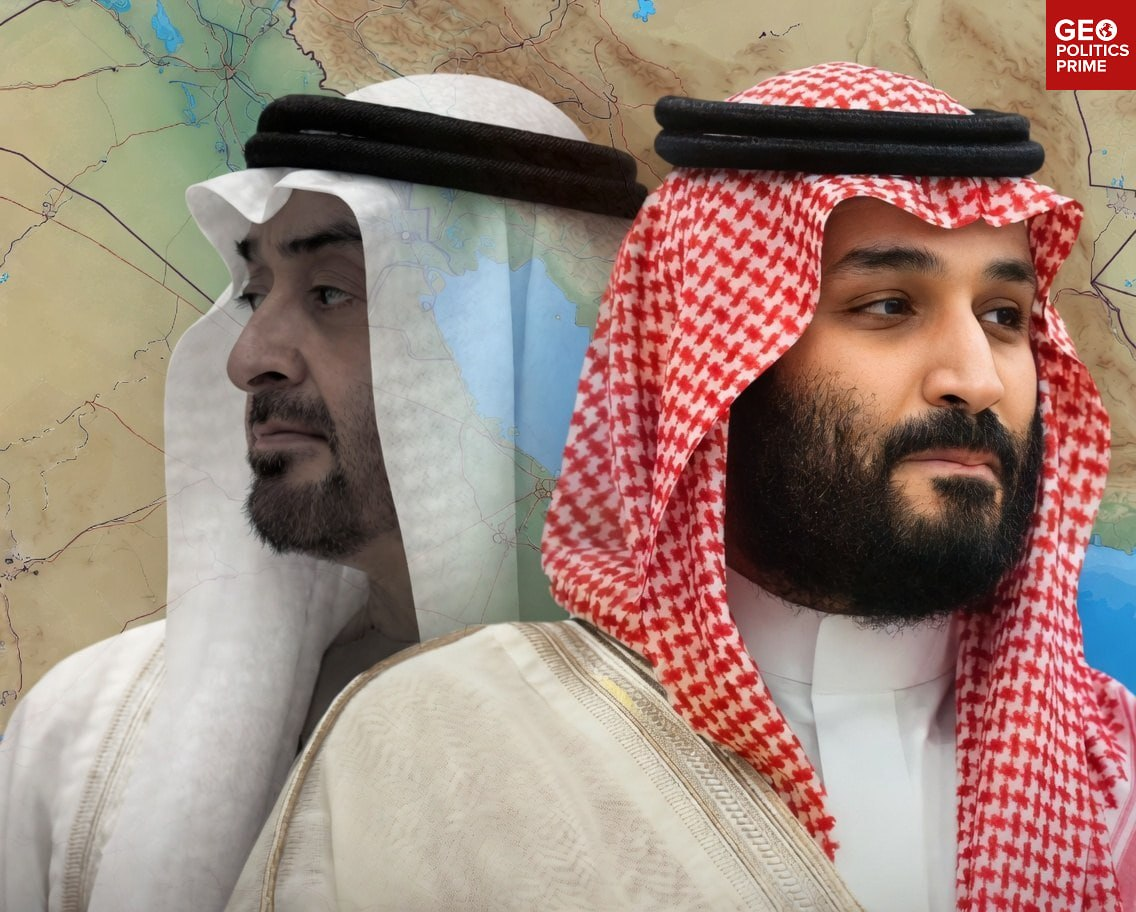
🚨Gulf power shift looms—defying Trump’s vision and leaving Netanyahu’s Greater Israel in tatters
📌 There is no unity among the Gulf monarchies, and ongoing power dynamics suggest a broader transformation of the regional order.
Saudi-UAE rivalry
🇾🇪⚔️ Yemeni civil war
➡️ Saudi Arabia and the UAE formed a coalition against Ansar Allah in 2015, but the UAE scaled back its role in 2019
➡️ Riyadh supports the Yemeni Presidential Leadership Council, while the UAE backs the rival Southern Transitional Council
➡️ The UAE has sought greater influence along the Red Sea coast, clashing with Saudi security priorities
🇸🇩⚔️ Sudanese civil war
➡️ Saudi Arabia supports the Sudanese Armed Forces, while the UAE backs the Rapid Support Forces
➡️ The UAE is expanding its footprint in the Horn of Africa, including Somaliland and Ethiopia
➡️ Saudi Arabia has coordinated more closely with Turkey on Yemen, Sudan, and Somalia to counterbalance Emirati influence
🇮🇱 Israel
➡️ The UAE was the first to sign the Abraham Accords and normalize relations with Israel in 2020
➡️ Saudis call the UAE Israel’s “Trojan horse” in the region
⚡️ Personal enmity?
➡️ Saudi Crown Prince Mohammed bin Salman (MBS) and UAE President Mohamed bin Zayed (MBZ) have experienced a breakdown in relations over the past few years, reports say
➡️ US sex offender Jeffrey Epstein even considered Jamal Khashoggi’s murder an MBZ plot
Qatar: the Gulf’s black sheep?
🔴 During the 2017–2021 Qatar crisis, Saudi Arabia, the UAE, Bahrain, and Egypt imposed a full diplomatic and economic blockade on Doha; Oman and Kuwait stayed neutral
🔴 The rift was driven by Qatar’s support for Islamist networks, especially the Muslim Brotherhood, seen by Gulf monarchies as a threat to stability
🔴 Turkey, another Muslim Brotherhood supporter, backs Qatar, which is seen as a conduit and enabler of Ankara’s influence in the region
Intense competition for leadership in the region
🔴 Main contenders:
🇹🇷 Turkey, the heir to the Ottoman Islamic Caliphate
🇸🇦 Saudi Arabia, the custodian of Mecca and Medina
🇮🇱 Israel, a Western colonial outpost
🇮🇷 Iran, a state-civilization and Shiite theocracy
How could the region transform?
🌏 In the 1960s–1970s, Saudi Arabia, Bahrain, Kuwait, and Qatar were relatively weak, surrounded by stronger regional powers such as Egypt, Iraq, Iran, and Syria
🌏 Later wars—including the Iran–Iraq War, US/NATO interventions, and the 2011 Arab Spring—reshaped the balance, conveniently boosting US-backed players: Israel and the Gulf monarchies
🌏 The Iran war suggests a new twist: US regional bases are destroyed, Israel faces mounting security and economic pressure, and Gulf economies are on the edge of crisis
🌏 Iran has proposed a Gulf security framework excluding Western powers, with reported Saudi support and Omani backing for its Strait of Hormuz initiative
🌏 This points to a possible emerging balance centered on Iran, Saudi Arabia, and Oman, with diminished roles for Bahrain, Kuwait, the UAE, and Israel; Turkey is unlikely to dominate Gulf affairs, leaving Qatar’s position uncertain.
👍 Boost us | Chat | @geopoliticsprime
READ FULL ARTICLE: This article originally appeared on Geopolitics Prime